Super Ace
JILI Games

Explore individual game titles, visual themes and the studios behind them.
JILI Games
Pragmatic Play
JILI Games
JILI Games
PG Soft
Pragmatic Play
Pragmatic Play
PG Soft
PG Soft
JILI Games
JILI Games
TaDa Gaming
PG Soft
PG Soft
PG Soft
Pragmatic Play
Pragmatic Play
JILI Games
Try a different name, or clear the filters to explore the whole collection.
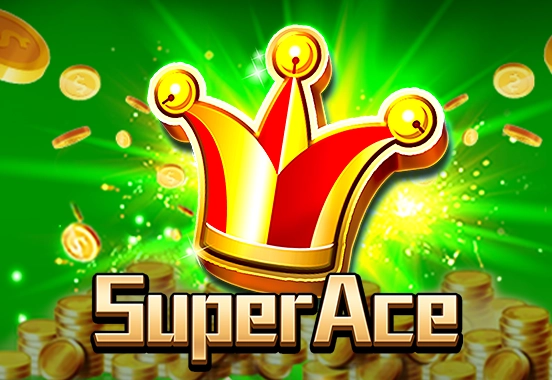
The slot catalogue brings together exact game titles and their verified supplier identities, with separate pages explaining how each product works. It is a different part of the hub from rummy tables. A slot containing card symbols is still a reel game unless its actual rules say otherwise. Super Ace, for example, uses card artwork within a JILI slot structure rather than offering a rummy draw and discard table. Keeping product types distinct helps a visitor move from a broad Yono search to the game they actually intended to find.
The catalogue includes titles documented by PG SOFT, Pragmatic Play, JILI Games and TaDa Gaming. Supplier attribution identifies the source of a game description; it does not establish that every host account offers the same game or regional configuration. The useful comparison is the evaluation type, feature trigger and state change. This page organises those differences without presenting an unmeasured ranking of the most played slots in India. A product can be familiar from a cover or search result while still needing its exact title checked before a live launch.
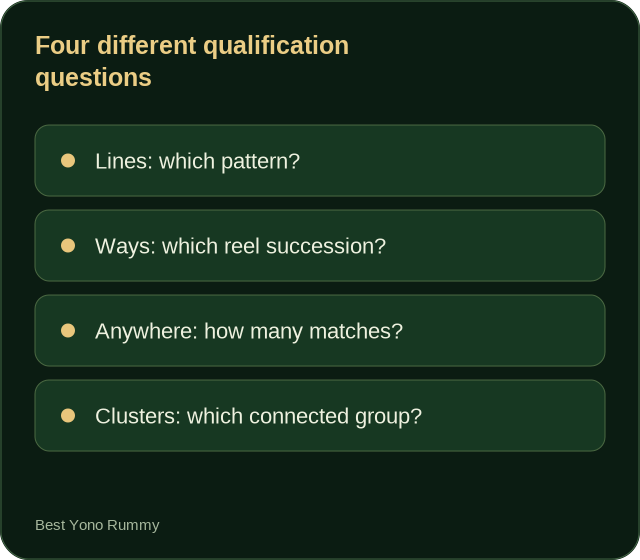
Slot boards can look similar while asking different qualification questions. A fixed line game evaluates specified patterns. A ways game evaluates matching succession through reels. A pays anywhere game counts matching symbols across the board. A cluster game requires connected matching groups. These structures should not be merged into one generic instruction to find several identical symbols. The location of a symbol can be decisive in one structure and less restrictive in another. The product page explains the rule for the exact title, while the catalogue helps identify which structure a visitor is comparing.
Gates of Olympus and Sugar Rush 1000 provide a useful contrast. The first uses a pays anywhere approach; the second uses connected clusters and developing multiplier positions. A scattered matching group that satisfies one kind of count may fail an adjacency condition. Conversely, a bent connected cluster does not need to resemble a conventional straight line. This is a practical browsing distinction, rather than a claim that one structure creates better personal returns. A larger board, more positions or more possible ways describes a design, not a guarantee of more payments on a particular spin.
The Pragmatic Play selection includes Big Bass Bonanza, Gates of Olympus, Gates of Olympus 2500, Sugar Rush 1000 and Sweet Bonanza. The shared studio does not make their rules interchangeable. Big Bass Bonanza centres its feature explanation on a fisherman collecting money symbols. The original Gates of Olympus combines pays anywhere results, tumbles and multipliers. Sugar Rush 1000 develops multiplier positions on a cluster board. These are different things to watch, even when all can produce a bright celebration and a changing win total.
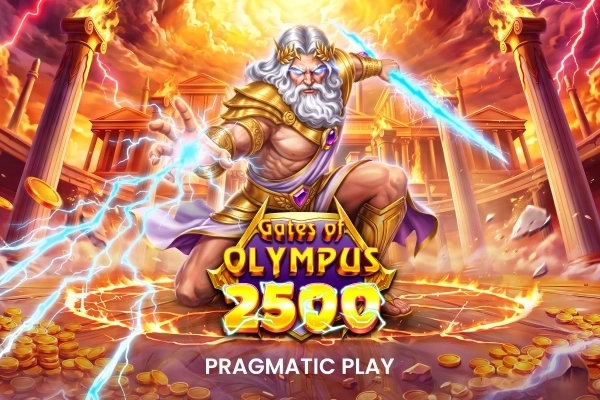
The numbered Olympus edition also needs its own destination. Gates of Olympus 2500 has a four mode feature structure that should not be assigned to the original game simply because both show Zeus. Sweet Bonanza belongs on its own product page with its exact loaded rules rather than receiving the cluster explanation from Sugar Rush. A useful studio filter helps browse related products, while the individual title page preserves the distinctions. Choose the game by its full name and feature identity, then confirm the loading screen before using a specific calculation or trigger explanation.
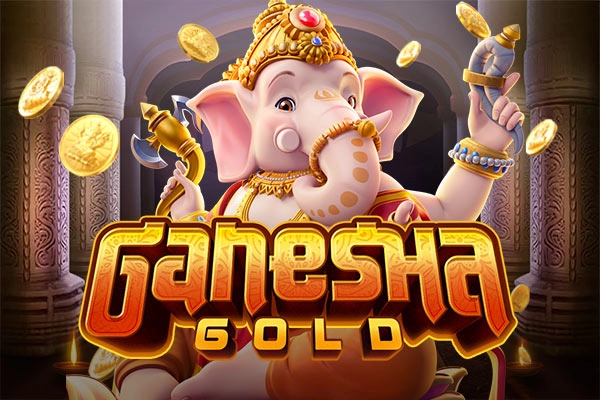
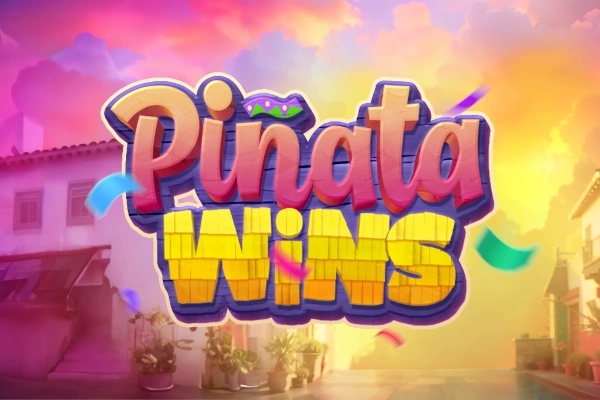
The PG SOFT selection includes Ganesha Gold, Lucky Neko, Pinata Wins, Treasures of Aztec, Wild Bandito and Wild Bounty Showdown. Several use gold frames or growing multipliers, but the event that changes the state differs. Ganesha Gold collects groups of Wilds during its feature. Lucky Neko uses Cat symbols to increase a multiplier. Pinata Wins collects multiplier values from qualifying framed symbols. Those distinctions make the supplier attribution useful without reducing the catalogue to one repeated description for every PG SOFT cover.
Treasures of Aztec adds a silver to gold to Wild transformation sequence, while the two western themed games have their own board shapes and feature progression. Wild Bandito and Wild Bounty Showdown are separate products, not two names for one bandit game. A visitor can compare what must happen before the multiplier increases and which symbols transform after a winning stage. That is more informative than comparing only the largest number in a promotional image. The exact product page supplies the detailed conditions and illustrative arithmetic, with the loaded information panel remaining the reference for the actual configuration.
Super Ace, Fortune Gems 2, Fortune Gems 3 and Money Coming are verified in the JILI Games catalogue. Several related titles are also documented by TaDa Gaming, and Fortune Garuda 1000 has a specific TaDa product page and release announcement. The catalogue preserves those primary source identities rather than assuming that an app using Yono in its name developed every game it lists. A host brand, supplier brand and individual game title are different kinds of names. Keeping them separate makes search, product selection and support records clearer.
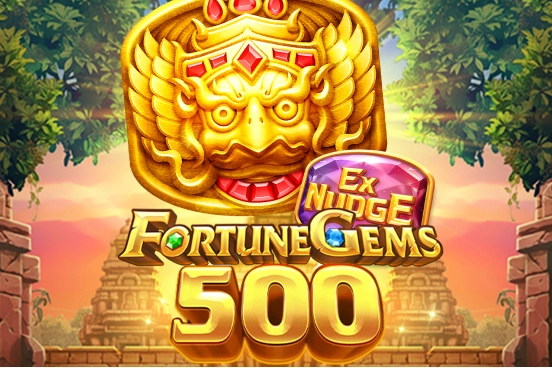
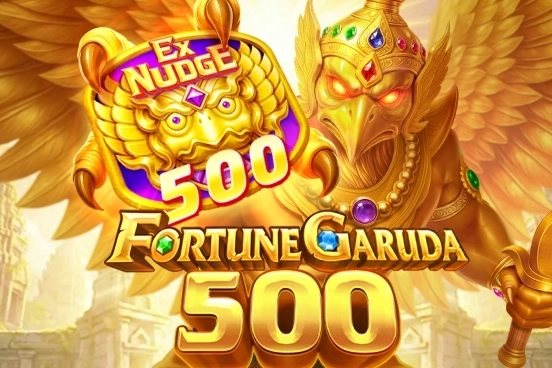
The compact Fortune products also differ from one another. Fortune Gems 2 identifies a Lucky Wheel relationship. Fortune Gems 3 identifies splitting symbols. Fortune Gems 500 explains a special reel with Ex NUDGE collection. Fortune Garuda 500 and Fortune Garuda 1000 have their own nudge and Wild related descriptions. A larger edition number is not a universal setting, a stake instruction or evidence that one title contains every feature in the family. Separate pages are useful precisely because they keep those mechanisms and source boundaries distinct while allowing the visitor to browse related themes.
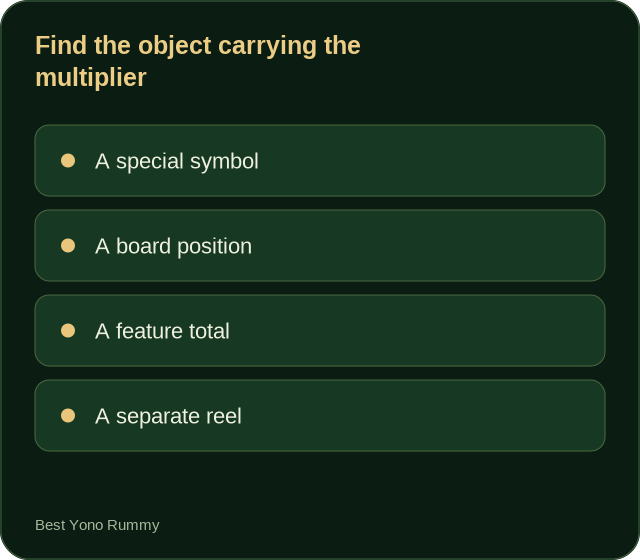
Many catalogue games show multipliers, but their collection and application rules differ. A multiplier can belong to a symbol, a board position, a feature total or a separate reel. First identify the object carrying the value, then the event that qualifies it and finally the award it affects. Seeing a large factor on a screen is not enough to establish a completed payment. The underlying award and loaded rules determine what the factor does. This is why the product pages use labelled arithmetic rather than presenting a large number as money already received.
For a hypothetical example, a two credit eligible award at five times produces ten credits. A one credit award at ten times also produces ten. The larger factor has not produced a larger monetary return because the base differs. Addition and multiplication can also be different feature operations, so do not assume every collected number is multiplied by every other number. Read the game's combined display and specific rule. The example explains units after qualification; it does not predict a symbol distribution or establish that any particular factor will appear during the next round.
An internal free spin feature belongs to a game's rules. A respin resolves another feature state under its own condition. A host's promotional spins or welcome offer belong to separate account terms. The same words can appear in all three contexts, so the destination and label matter. A catalogue page describing a scatter trigger does not establish a deposit bonus, eligibility for a new account or a withdrawal condition. Follow the product explanation for the game mechanism and the host's current information for an account offer.
The distinction also prevents invented features. A title with a Lucky Wheel should not automatically be described as having free spins, and a game without an internal free spin mode can still appear on an account promotion page. Fortune Gems 3's specific product identity should not inherit the second edition's wheel or another title's feature counter. A useful product page states what the verified game does and leaves unrelated commercial claims to their correct source. This makes the catalogue practical without creating an oversized list of bonuses that no single loaded game actually matches.
A family name is useful for browsing, while a complete title identifies the actual product. Big Bass sequels, numbered Olympus games, Fortune Gems editions and Money Coming variants should keep their suffixes. A familiar character or nearly identical colour scheme is insufficient to establish the rules. Before applying a product explanation, check the loading title and supplier information. The same discipline helps when a person arrives from a short search query that returns several related covers rather than one unambiguous game.
An original comparison image can list full titles alongside one distinguishing feature, instead of placing only large edition numbers in a row. For Money Coming, the original, Expanded Bets, second title and thirty thousand edition have separately documented identities. For Garuda, the JACKPOT suffix identifies a different release rather than decorative marketing text. These distinctions reduce confusion without claiming that every version is available through one account. A catalogue page can provide useful local detail even when an external launch destination or regional availability has not been confirmed for the visitor.
The selected stake, optional mode cost and completed return need to use one consistent unit. A credit is not automatically a rupee until the loaded game establishes its value. Extra Bet or another optional setting can change the total charged amount, so compare full costs rather than only the largest displayed factor. A game image showing a large cash award at a large stake is not directly comparable with a smaller award at a smaller stake. Bet multiples and cash amounts answer different questions about the outcome.
For a hypothetical session, twenty paid rounds at two credits cost forty. If all settled returns total thirty one, the result is minus nine credits. An internal feature total is included among returns once; it should not be added again after its component awards have already been counted. A running display and final summary can show the same money at different stages. The calculation is straightforward when each number keeps its label. It does not reveal the next outcome or prove that one game structure is a reliable income source. It simply describes a completed record accurately.
A useful tile shows the exact title, recognisable cover and supplier attribution. Its product page then explains the board, qualification rule, feature state and example calculations. Search and category controls help find a title, while source links identify the official documentation. These local details remain useful before any external launch. An image is a product identifier, not evidence that a game has been embedded, that every launch route works in every region or that an account offer has been verified. The visible action should describe what is actually available.
On mobile, check the game title, stake control, information menu and relevant feature counters before starting. For an interrupted round, preserve the exact edition name, time, total charged stake and any available round reference. The host wallet, verification process, payment methods, withdrawal conditions and individual eligibility in India belong to the host's current service information. The catalogue's role is to make game identity and mechanics understandable. Its primary source links and hypothetical examples do that without certifying unrelated account facts, inventing popularity data or promising that a memorable feature will occur in another session.
A card themed slot such as Super Ace still resolves reel outcomes under slot rules. Rummy drawing, discarding and declaring are different mechanics, so shared Ace or Joker artwork does not make them interchangeable.
Related titles can change the board, trigger or multiplier behaviour. Gates of Olympus and Gates of Olympus 2500, for example, need their own rules rather than one combined description based only on Zeus artwork.
A multiplier scales an eligible underlying award. A small base at a large factor can equal a larger base at a smaller factor, so the full calculation is needed to compare actual payments.