Fortune Gems 500 and the official TaDa product
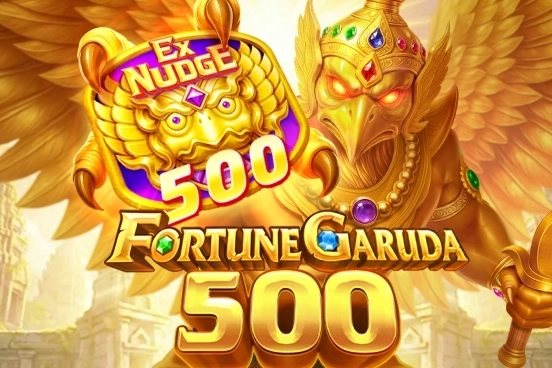
Fortune Gems 500 is a TaDa Gaming product with a three by three main grid, five paylines and a special fourth reel. Its official product page identifies Full Symbol, Multiplier and Nudge features. The five hundred in the title distinguishes this edition and its published multiplier identity; it is not a required five hundred rupee stake. Keep the complete name visible when browsing the Fortune Gems family. Similar gem artwork does not make Fortune Gems 2, Fortune Gems 3 and Fortune Gems 500 interchangeable products.
The central reading task is to separate the underlying main board payment from the multiplier reel and any Ex NUDGE collection sequence. This page uses TaDa's exact product and announcement sources rather than treating an unsourced Yono label as the developer. The calculations use assumed credit amounts and are not recorded results. A live game's loading title, supplier information and rules remain the reference for its precise configuration. The product page explains the mechanism without establishing that every host or app offers this title to every person in India.
A compact main board with five paylines
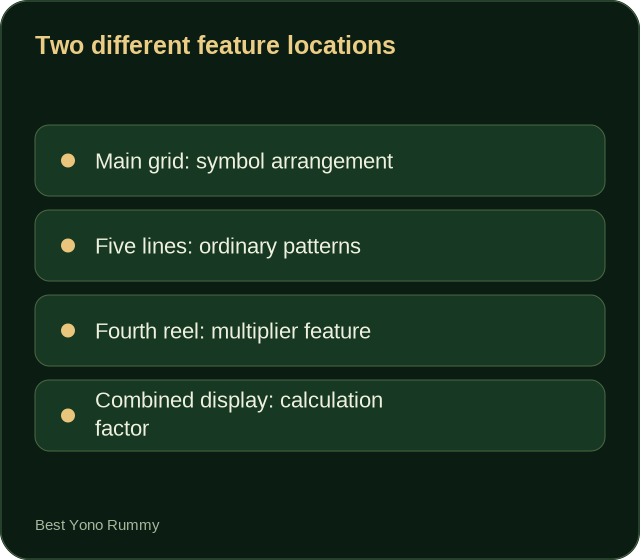
The main grid contains three reels with three positions, while five fixed paylines define the evaluated patterns. Matching gems need to occupy the positions required by those lines under the loaded paytable. A total count of identical objects anywhere is not the same as a qualifying line. This is a useful distinction for someone arriving from a pays anywhere or cluster game. A small board does not eliminate the need to read the line relationship; it makes that relationship compact enough to illustrate clearly.
Imagine three matching symbols across the main reels on an eligible horizontal pattern. Moving the middle symbol into another row changes which line, if any, qualifies, even though the total number of matching gems stays three. The line diagram supplies the exact patterns. Five lines do not mean five awards occur on every spin, and nine positions do not mean nine independent cash payments. The underlying value also depends on the symbol and selected stake. This page avoids inventing a paytable amount for a particular gem, using assumed awards only after the qualification step is established.
The fourth reel performs a different job
TaDa separates the main grid from a fourth reel carrying multiplier values or the Ex NUDGE symbol. The fourth reel therefore should not be treated as another ordinary gem column extending a main board line. Its role is to influence the award calculation through a factor or feature sequence. Read the settled reel state rather than a value briefly visible while it moves. A large number on the right is not sufficient evidence of a main board payment, and it is not a cash amount deposited independently of the qualifying result.
For a hypothetical underlying award of two credits and an applicable five times factor, the resulting amount is ten. The factor five is not another five credits to add to two. An assumed one credit award at ten times also produces ten, showing why the multiplier alone cannot rank the two outcomes by payment size. The main grid and multiplier reel provide different parts of the explanation. A useful product image should preserve both, while a close up of the largest multiplier loses the underlying result needed to interpret it.
Ex NUDGE starts a collection sequence
The published Ex NUDGE feature initiates successive multiplier grabs on the special reel, with up to eleven potential grabs described in TaDa's later explanation. The useful distinction is between one settled multiplier and a sequence that collects more than one value. A feature animation should be read as development of the current round, rather than a series of unrelated account deposits. The loaded rules establish the precise trigger, continuation and ending conditions. This page does not infer those details solely from the word nudge or a short highlight clip.
An original schematic can show the Ex NUDGE symbol, a first collected value, another collected value and the combined display. Label the arrows as feature steps, rather than user choices to select a preferred value. The existence of several potential grabs does not mean every feature completes the largest number or collects the highest value. A collection counter describes events resolved so far, while a possible upper bound describes what the mechanism permits. Keeping those concepts separate makes the sequence understandable without presenting the maximum feature length as an ordinary or guaranteed outcome.
Collected multiplier values are added
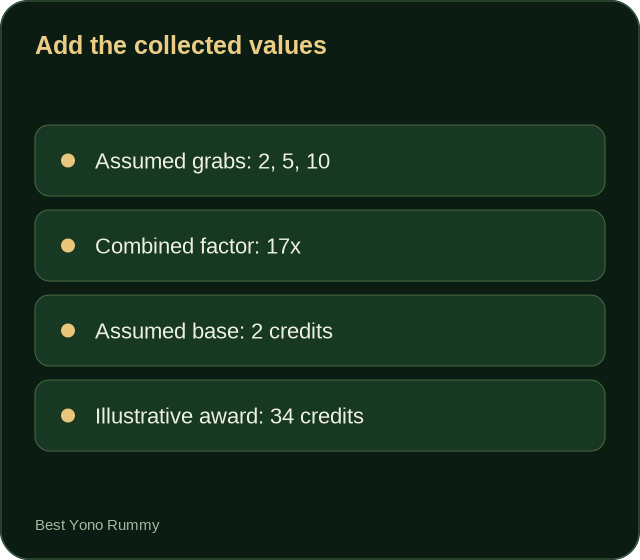
TaDa's later official explanation states that the collected winning multipliers are added together. This is the arithmetic used for the simple examples here. Addition differs from multiplying every collected factor by the next, even when promotional language describes a chain becoming more powerful. Read the combined value actually shown by the game rather than assuming that every dramatic animation means compounding multiplication. The collection total is a factor in the relevant award calculation, not a running total of credits paid out separately at each grab.
Assume a hypothetical sequence collects two, five and ten times. Adding them gives seventeen times. If the eligible underlying amount is two credits, applying seventeen produces thirty four. Multiplying two by five by ten would instead produce a factor of one hundred, which is a different calculation. The example illustrates the official addition relationship without predicting the selected values or the number of grabs. It also prevents double counting: the final thirty four already incorporates the two credit base amount and seventeen times factor. Neither intermediate number should be added again as another settled return.
The multiplier range is not a promised award
The official product page advertises multiplier values up to five hundred times. That identifies a feature range, rather than a guarantee that a spin reaches its top value. A multiplier ceiling is also different from a whole game maximum payment. The factor applies within a calculation whose underlying award and qualifying conditions still matter. This page does not infer a typical payment from the largest published number or assume that a title number is the amount a person needs to deposit. Read the loaded game for the exact current configuration.
For an illustrative comparison, a one credit underlying amount at fifty times produces fifty credits. A ten credit amount at five times produces the same fifty. The larger factor has not created a larger payment in this example because its base is smaller. This is why a screenshot of five hundred times cannot establish a complete account result by itself. The selected stake, qualifying main board award, feature calculation and final settlement all provide necessary context. A maximum is a boundary in the design, not a forecast or a target that becomes due after a run of smaller outcomes.
Extra Bet changes the selected mode and cost
TaDa's published description says Extra Bet filters out lower multiplier values. The option therefore changes a particular feature distribution, while also being an additional bet setting whose price must be read in the loaded game. It should not be described only by mentioning access to higher values. The full charged amount is necessary when comparing completed sessions. A mode can alter the set of available outcomes without guaranteeing that the next result is favourable or that a larger total stake will be recovered.
Suppose, purely for arithmetic, an ordinary spin costs two credits and a displayed optional mode raises the total charged cost to three. Ten spins then cost thirty rather than twenty. If settled returns are twenty four, the net result is minus six under the higher cost. The example does not assert the actual Fortune Gems 500 surcharge; it shows why the displayed total cost must be included. A product page can explain the published filtering purpose while leaving the precise current price to the loaded control, rather than inventing a percentage from another edition.
Full symbol outcomes differ from line counts
The official feature list includes Full Symbol. A full board condition and an ordinary line condition answer different questions. Several qualifying lines can exist without every main position being identical. Conversely, a complete symbol board may receive a specific treatment under the loaded rules. A nearly complete board should not be described as satisfying a full condition. The remaining unmatched position can matter even if most of the screen looks similar. A cover filled with gems is visual branding, not evidence that a full symbol event occurred.
An explanatory illustration can compare an incomplete main grid with a complete one and label the distinction without assigning invented payments. This keeps the concept concrete while respecting the need to read the actual paytable for its value. It also prevents a full symbol image from being confused with the Ex NUDGE collection process. One concerns the symbol arrangement on the main grid; the other concerns the special multiplier reel. They can be discussed on the same product page without implying that every spin combines all named features or that every attractive arrangement produces the maximum result.
Comparing the Fortune Gems editions
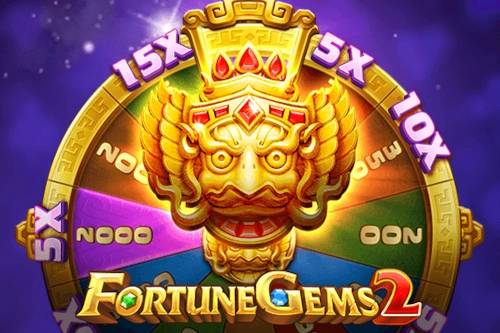
Fortune Gems 2 is documented with a scatter linked Lucky Wheel, while Fortune Gems 3 has a split symbol identity. Fortune Gems 500 centres its special reel explanation on Ex NUDGE and multiplier collection. Those differences make separate catalogue pages useful. A visitor searching for one edition should see its exact title and distinctive mechanism, rather than a generic description recycled across three similar covers. The family relationship does not mean that a Lucky Wheel or split reward should be automatically included in the five hundred edition's rules.
The comparison is about process, not a ranking of expected personal returns. A larger title number does not establish better odds, a later account promotion or the same host availability. A useful family illustration can show one line for each edition and the event that changes its calculation. This makes the choice understandable without asserting an unmeasured Indian popularity order. It also makes support information more precise: a report mentioning Fortune Gems 500 and Ex NUDGE is more useful than a generic reference to the gems game when several related products appear in the same lobby.
Mobile reading and a clear completed record
On a phone, keep the main grid, fourth reel, collected multiplier display and stake control visible together. Ordinary animation speed can help when learning the collection order. A speed option changes presentation rather than allowing a player to select a preferred grab by tapping at a particular moment. If a round is interrupted, retain the complete title, time, total charged stake and any available host round identifier. A cropped collection value does not establish the underlying line result or the final wallet settlement, so the completed round history is more informative.
Use a consistent unit for session arithmetic. Twenty paid spins at two credits cost forty; completed returns of thirty three leave a loss of seven. Count the final award once, even when intermediate and summary screens repeat it. Confirm the loaded credit value before treating amounts as rupees. Registration, deposits, verification, withdrawals and individual eligibility in India belong to the host's current service terms. TaDa's product information establishes the game identity and feature description, while these account facts require their own source. The examples here explain addition and scaling without claiming a tested performance result or promising another sequence.
Questions about Fortune Gems 500
What starts the Ex NUDGE sequence?
The special fourth reel can show the Ex NUDGE symbol, initiating a multiplier grab sequence under the loaded rules. It is different from an ordinary single multiplier result on that reel.
Are the collected multipliers multiplied together?
TaDa’s later official explanation states that collected winning multipliers are added. In an assumed example, two, five and ten combine to seventeen rather than a product of one hundred.
Does the title require a five hundred rupee stake?
The number identifies this edition and its published multiplier identity. The actual selected stake and unit are shown inside the loaded game, rather than being fixed by the title.
Source notes
Listing reference: game artwork and catalogue.