Super Ace
JILI Games

Explore familiar JILI titles, including the Super Ace, Fortune Gems and Money Coming collections. Some regional catalogues list this artwork under TaDa Gaming.
Explore the studio’s titles in this directory.
JILI Games
JILI Games
JILI Games
JILI Games
JILI Games
JILI Games
Try a different name, or clear the filters to explore the whole collection.
The JILI Games section brings together Super Ace, Money Coming, Fortune Gems 2, Fortune Gems 3, Fortune Gems 500, Fortune Garuda 500 and Fortune Garuda 1000. These seven entries are a selection from the directory, rather than a complete list of the studio's work. The last title has a primary release announcement from TaDa Gaming. The directory keeps it beside the other Garuda edition so the titles are easy to compare, while preserving TaDa's name on the relevant source.
Start with the part of the title you actually know. Card ranks and a joker can point you towards Super Ace. A numeric reel and wheel description suggests Money Coming. A title beginning Fortune Gems still needs a suffix before you can select the right page. A bird-themed Fortune Garuda screenshot still needs its edition number. These are practical ways to narrow the list. Artwork is useful for recognition, while the complete title and its studio record establish which release the description concerns.
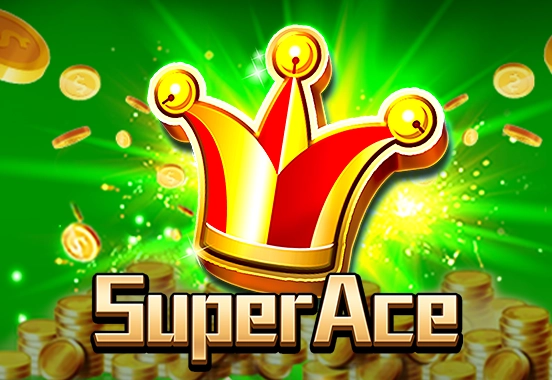
JILI classifies Super Ace as a slot and describes a ways format and a Golden Joker feature. Playing-card imagery is consequently a poor reason to look for rules about holding, grouping or discarding a thirteen-card hand. The interface may show aces and court-card symbols, but the relevant questions concern positions on reels, symbol replacement and the sequence of events in a spin. The title's card vocabulary and its game category carry different information.
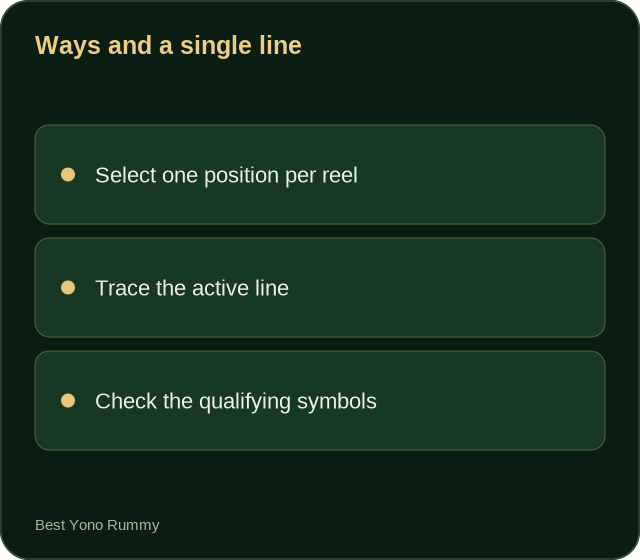
Think of a simple illustration with four positions on each of five reels. Choosing one position from each reel gives four multiplied by four multiplied by four multiplied by four multiplied by four, or 1,024 possible position paths. JILI uses the figure 1,024 ways for Super Ace. The arithmetic explains what a ways count can describe. It is not a statement that all paths pay, that they are independent, or that such a figure measures the chance of a particular result. The rules still decide which symbol combinations qualify.
In the studio's Super Ace description, a golden card and a Golden Joker are related stages of a feature. To interpret a short clip, note what appeared before the symbol changed and what happened afterwards. A still image of the later state may show a joker without showing the earlier golden card. Counting both images as two unrelated outcomes would lose the relationship between them. This is one reason a short sequence of labelled frames can be more helpful than a single brightly coloured thumbnail.
For a paper explanation, draw the same reel position on two small boards and label them before and after. Mark the original card in the first drawing and the resulting symbol in the second. Then write down which event connects the frames. If you cannot identify that event from the clip or the rules, leave it open rather than filling the gap with a feature from Super Ace 2 or another similarly named release. The directory entry here is for Super Ace without an added edition number.
Money Coming offers a useful contrast with a ways game. JILI's product page lists one line and describes a special wheel. With a one-line title, the active line has a particular position in the display. Other visible symbols can contribute to atmosphere or play separate roles under the rules, but seeing a pattern somewhere else on the screen is not enough to establish a line result. Read the displayed line and the wheel function as distinct parts of the interface.
Imagine an illustration where a three-position line shows a numeric combination and a separate wheel displays a factor. A careful description first records the line and then says whether the rules apply the wheel to its result. Seeing a large numeral on the wheel does not by itself establish a credit amount or a final total. The studio also lists separately named Money Coming releases. Preserve the missing or present suffix before borrowing any details. An authentic fact about Money Coming 2 may still be an incorrect fact about the original.
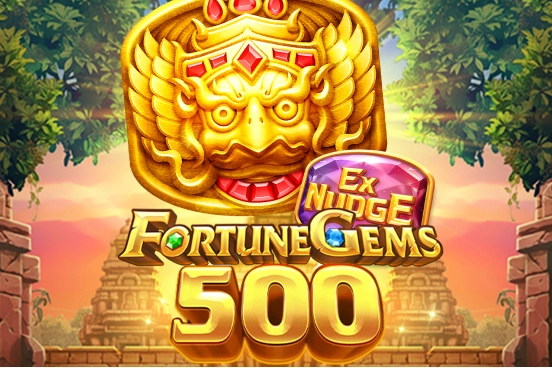
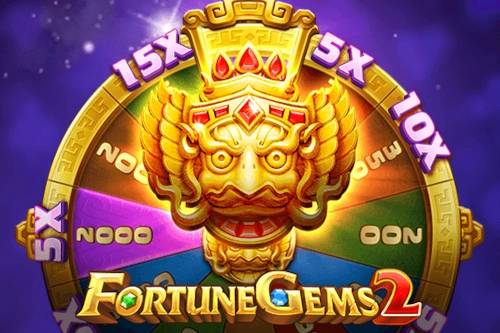
Fortune Gems 2, Fortune Gems 3 and Fortune Gems 500 each have a separate title entry in the collection. The first two numbers look like ordinary sequel numbers. The third is part of a longer named edition. Nothing in that naming sequence establishes that the games are versions of the same installed file or that one supersedes another on every platform. JILI's catalogue treats titles as individually identifiable products; the directory follows that convention when matching artwork and source references.
If somebody sends you a picture labelled only Fortune Gems, build a comparison with three rows. Write the complete title, matching publisher reference and one distinguishing observation in each. A clearly printed 3 can identify a title row; a 3 appearing on a reel or multiplier is a different observation. The position of the number matters. A suffix attached to the title above a game gives stronger identification than a large number captured during an animation. Keep the latter as a clue until a source connects it to a specific release.
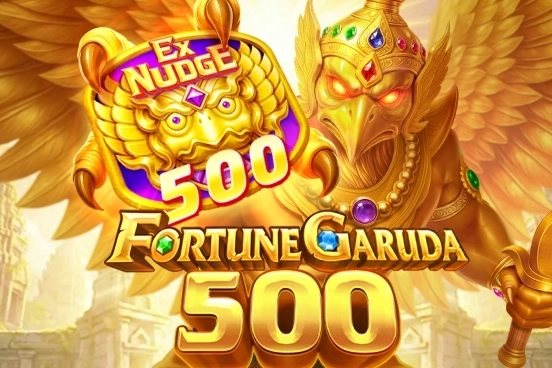
JILI describes a compact reel layout, a nudge feature and a side-reel multiplier for Fortune Garuda 500. TaDa Gaming's announcement for Fortune Garuda 1000 separately describes its Garuda theme and a feature called Ex Nudge in that release. The two titles have genuine points of resemblance, which explains why a reader might remember the artwork but forget the suffix. The suffix still matters when looking up a feature, reading a paytable or matching an illustration to a publisher's record.
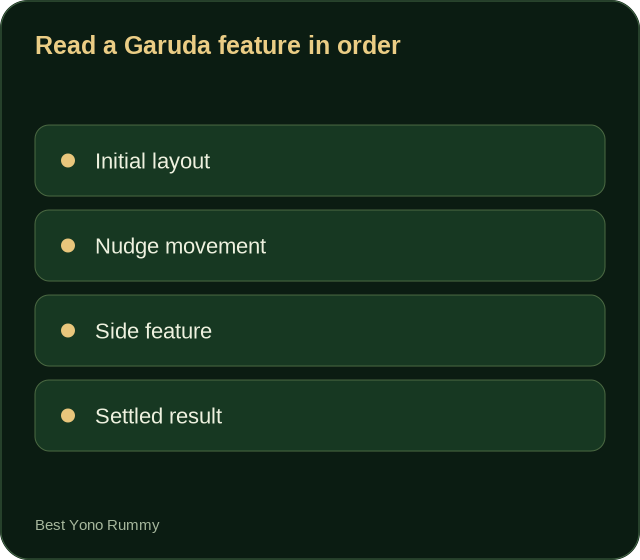
When reconstructing a Garuda clip, distinguish the initial reel state, any nudge movement and the separate feature display. A nudge can change the visible alignment after the first stop, so a picture taken before the movement and one taken after it need not show the same symbols. A side-reel factor is another separate piece of information. The numeral in the title cannot tell you which factor appeared in a particular round or what total followed. The full sequence and the edition-specific rules supply that connection.
A multiplier changes a defined base value under defined conditions. In an invented arithmetic example, a base result of four credits multiplied by three gives twelve credits. A displayed three in the title, a symbol count of three or a count of three remaining stages would leave the four-credit value unchanged unless the rules give that three a multiplier role. Record the label beside the number before performing the arithmetic. The same habit is useful when comparing the Fortune Gems and Fortune Garuda names.
If there are two factors on a screen, ask how the rules combine them. Adding two and three gives five, while multiplying two and three gives six. Applying those values to four illustrative credits produces twenty and twenty-four respectively. Neither answer can be selected merely because two animated numbers appeared. This is a lesson in reading a calculation rather than a claim about how all JILI titles combine factors. Check the relevant game's own help before using a calculation to explain a real interface.
A wide studio image may show the title, reels and side mechanic together. A vertical phone crop may emphasise the figure, the central reel window or the largest number. When comparing the two, first look for stable details such as the exact title, position of a feature panel and style of symbol arrangement. Background colours and animated highlights can change during a feature. A cropped phone image that lacks the side reel cannot settle which state that reel occupied outside the picture.
A practical comparison needs only three short notes: the full title, the studio source naming it and the visible activity you are trying to identify. If the notes read Fortune Garuda 1000, TaDa release announcement and a nudge shown in a clip, another reader knows exactly what is being compared. If the notes read only JILI gold game, several entries remain possible. A careful partial identification is worthwhile; it can later be completed if the reader finds an uncropped title screen or a better studio reference.
The studio label in this directory is a navigation aid. JILI provides records for Super Ace, Money Coming and titles in its Fortune collection, while the cited Fortune Garuda 1000 announcement is published by TaDa Gaming. A useful catalogue records the name that appears on each individual source instead of silently rewriting every credit as if one source had supplied them all. For questions about a particular release, begin with the credited publisher record for that title.
That distinction also limits what the directory can infer. A source listing a slot title confirms a product reference. It does not show that every Yono app offers the title, that a shared installation offer includes it or that access is available in India. The studio section is a way to compare names and game mechanics without making those additional claims. For a specific platform question, a current and relevant platform source is needed in addition to the studio attribution.
Choose Super Ace if your question concerns card symbols, ways or a Golden Joker. Choose Money Coming if you remember a numeric line and a wheel. Choose the Fortune Gems title with the actual suffix if the remembered name ended in 2, 3 or 500. Choose the Garuda edition when the identifying clues are the bird, its complete title and a nudge or side mechanic. This approach uses the strongest available clue first and leaves broad visual resemblances for a second pass.
Once a title is identified, keep its game page and the studio collection as separate bookmarks. The game page preserves the detailed reference. The studio collection makes it easy to compare a neighbouring title without pretending that a rule moves from one to the next. If the comparison concerns a multiplier, also write down which base amount, event and unit you mean. A title, a feature and a calculation then remain connected in a way that another reader can actually check.
A friend remembers a gold-coloured game, a number ending in two zeros and an animated feature on the side. Those clues do not yet distinguish Fortune Gems 500 from Fortune Garuda 500. Ask whether the title included Gems or Garuda and whether the original picture showed the bird associated with the latter. If the answer is unclear, keep both candidates. The right follow-up is a more discriminating observation, not a longer list of unverified features.
A second friend remembers a joker and a wheel but cannot say whether they appeared together. Treat them as two independent clues. A Golden Joker points towards the Super Ace material, while a wheel points towards Money Coming. Until an actual title screen connects them, they may describe two separate games viewed one after another in a lobby. Preserving that possibility avoids inventing a hybrid game that neither studio reference describes.
The local collection groups the Garuda editions for browsing. TaDa Gaming publishes the source announcement for Fortune Garuda 1000, and its credit is preserved for that particular release.
JILI lists Super Ace as a slot. Its card images are reel symbols, so its own ways and feature rules apply rather than rules for grouping a thirteen-card hand.
They identify named editions. A particular spin result depends on the title's actual rule calculation, symbol state and units; the suffix alone supplies none of those details.