Lucky Neko and its Cat symbol mechanic
Lucky Neko is a PG SOFT slot whose distinctive feature is a Cat symbol that increases a win multiplier. The beckoning cat artwork makes the game recognisable, while the multiplier display explains the actual effect on a qualifying result. These two roles should be kept separate. A large cat image in a banner identifies the theme; a Cat symbol inside the loaded game participates in a specific rule. The exact title and PG SOFT attribution matter because other lucky cat themed games can use completely different boards and bonus structures.
The published game combines six reels, collapsing results and a changing ways display. It is therefore useful to follow the screen in stages: identify a qualifying symbol sequence, note any Cat driven multiplier increase and then read the amount awarded. The feature counter adds another layer during free spins. This page uses original examples in assumed credits to explain those relationships. It does not use the theme as evidence of better outcomes for a particular country, and it does not turn the presence of a cat in a screenshot into proof of an actual payment.
Reading the six reel layout
The official information describes six reels with an additional reel above the middle four. Symbols can occupy different amounts of space, and the ways display changes with the board state. This is a more useful description than assuming Lucky Neko is a fixed rectangular slot with one permanent ways number. Watch the visible ways indicator during a complete result. A cropped image that excludes the upper strip can omit part of the layout that helps explain the current board. The loaded information panel supplies the precise evaluation rules for that version.
The number of available ways is not a count of payments guaranteed on the spin. It describes combinations available under the current arrangement. For an illustrative ways calculation, two matching positions on a first reel, three on the next and one on the next would create six qualifying combinations if they meet the relevant succession condition. An unrelated symbol in the middle cannot simply be skipped because there are more copies on a later reel. This arithmetic demonstrates how distribution matters; it is not a reconstruction of Lucky Neko's full board or an invented paytable example.
Collapses continue the same spin
Lucky Neko uses collapsing reels, allowing fresh symbols to enter after a qualifying result has been resolved. The changing board can produce another result within the same initial spin. That means one spin action can generate several stages of animation and several changes to the ways display. The stake belongs to the paid action that began the round, rather than being charged for each falling group shown during its continuation. A clear record separates the initial stake from the stages that contribute to the round's total award.
Suppose an illustrative spin produces awards of one, two and four credits before the sequence ends. The sum is seven. If the interface shows running totals of one, three and seven, those figures should not all be added as new payments. The last total already contains the earlier stages. This matters when watching a fast replay: a large number may be a sequence summary rather than a new award. The number of collapse stages also does not establish the value by itself. Several small results can add to less than a single larger result elsewhere.
Cat symbols add two to the multiplier
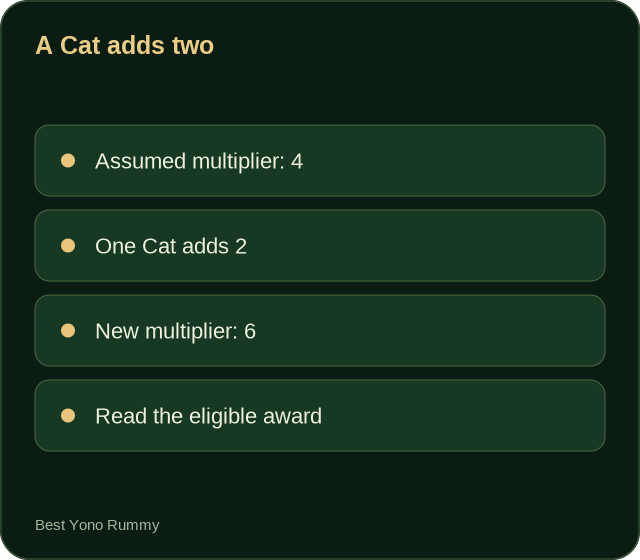
The published rule increases the win multiplier by two for each Cat symbol that appears, before wins are paid. The word by describes an addition, not an instruction to multiply the existing number by two every time a Cat appears. This is the central arithmetic distinction in Lucky Neko. Follow the current multiplier display and the number of qualifying Cat symbols, rather than assuming that every new cat doubles the previous value. A visually dramatic appearance can still represent the same defined increment as a quieter one.
For a hypothetical example, an active multiplier of four increased by one Cat becomes six. Two qualifying Cats would add four in total, taking an assumed starting four to eight. Repeated doubling would instead produce eight and then sixteen, which is a different calculation. If an eligible award were three credits at six times, it would become eighteen. The example explains addition and application only. It does not specify how often Cats occur, and it does not promise that a screen containing a Cat also contains a qualifying monetary result.
Multiplier state is different from a win
A multiplier is a factor used to scale an eligible award. It is not an amount of money on its own. A screen can show a higher multiplier while still needing a qualifying result before that value affects a payment. Keep the multiplier label separate from the win and balance labels. This is particularly useful in Lucky Neko because the cat animation naturally draws attention away from the ordinary symbols. The cat's appearance explains a change in state; the full outcome explains whether an amount is paid.
Imagine an illustrative display with an eight times multiplier, a two credit stake and a feature total of twenty credits. Adding eight and two to twenty would mix a scale factor, a cost setting and a payment total. The useful calculation starts from the eligible base award. If that award is one and a half credits and eight times applies, the resulting amount is twelve credits. The two credit stake remains a cost of the paid round, while twenty remains the earlier feature total in this illustration. Labelling each unit is the easiest way to avoid a mistaken account calculation.
Entering free spins with scatters
Four scatters trigger ten free spins in the published information, with each additional scatter adding two more at entry. Scatters use a separate feature condition from the normal matching ways structure. They should be counted as scatters, rather than treated as another regular symbol type in a ways calculation. Once the feature starts, the remaining spin counter records the rounds still available. The starting award describes the length of the feature at entry, not the final payment it will produce or the number of Cats it will contain.
For example, a feature starting with ten spins can finish with a larger total than an independent feature starting with twelve. That would not contradict the rules because the number of rounds and the awards within those rounds are different variables. Likewise, scatters appearing in separate unrelated normal spins should not be combined manually into a trigger count. Read the notification attached to the qualifying outcome. This is a useful distinction when comparing short clips, since a montage can show several attractive scatter screens without making clear whether they belong to the same round.
Cats and retriggers during the feature
The official free spin rules again describe an increase of two for each Cat before awards are paid, and the feature can retrigger. A retrigger concerns additional rounds, while a Cat concerns multiplier value. Watching the two counters together makes the feature easier to read without confusing them. An increase in the multiplier does not by itself mean extra spins have been awarded. An increase in remaining spins does not by itself represent another fixed amount of money. The labels on the feature screen tell the viewer which state changed.
If an illustrative feature has four rounds remaining when a retrigger adds rounds, record the new remaining count separately from its current multiplier and payment total. Do not enter the number of added spins as credits in a session ledger. The same discipline applies when a Cat appears during a collapse sequence: follow the collection and payout order shown by the game rather than creating a new multiplier rule based on a single frame. A complete feature opening and ending are useful context because they establish the state boundaries that a short highlight clip may omit.
Wilds, Cats and scatters have different jobs
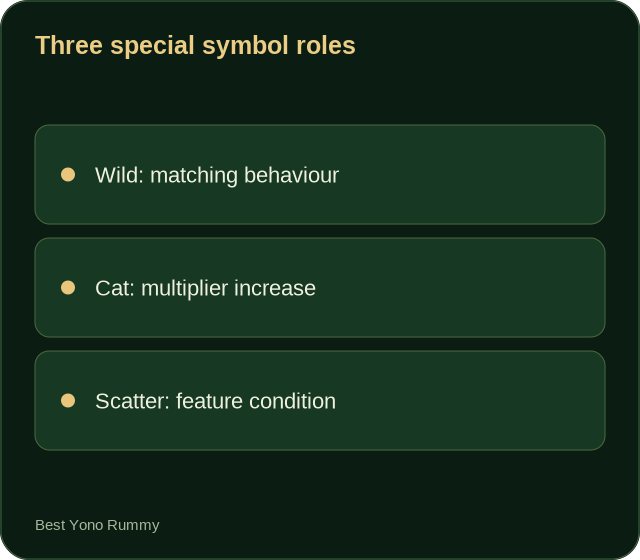
Lucky Neko's official information names Wilds on the Way as another part of the game. This should not make Wilds, Cats and scatters interchangeable. Wild related symbol behaviour affects the regular symbol evaluation under its own rules; Cat symbols change the multiplier; scatters qualify for the free spin feature. A useful explanation follows one role at a time. The fact that several special symbols share gold colouring or appear in the same animation does not give them the same substitution or trigger powers.
When annotating a board, use a different mark for each special symbol category. Start with the regular winning sequence, then show any Wild contribution and finally label the Cat and scatter effects separately. This produces an understandable record without guessing at values from the artwork. The loaded paytable remains the authority for detailed substitution and transformation conditions. If a catalogue thumbnail is too small to preserve those distinctions, it should identify the title and studio while leaving the rule explanation to a clear product illustration. A single attractive close up cannot replace the labelled game screen.
Comparing Lucky Neko with other PG SOFT titles
Lucky Neko increases its multiplier through Cat symbols. Ganesha Gold increases a free spin multiplier by completing groups of collected Wilds. Wild Bandito increases its feature multiplier after qualifying winning cascade stages. These are different events, even though all three games can show a growing number near the reels. A person choosing among them can compare what must happen for that number to change. That offers a more useful distinction than describing every game as colourful, exciting or capable of large multipliers without explaining the process.
The comparison also prevents importing another game's boundaries. A persistent position in Sugar Rush 1000 is not the same object as a Cat driven multiplier, and the maximum printed on one game does not establish Lucky Neko's configured limits. Use exact title pages and the loaded rules for numerical details. A few memorable outcomes cannot establish which mechanism is more profitable for a particular person. The meaningful catalogue information is the type of board, trigger, state change and presentation. Those details help a visitor choose a game they can read and distinguish from neighbouring titles.
Mobile readability and the completed session
On a phone, keep the upper reel strip, multiplier and lower stake controls visible together. If browser bars obscure the bottom interface, resolve that before starting. Normal animation speed can make it easier to see when a Cat changes the multiplier and when a collapse contributes another award. Speed controls alter presentation, while the game's stated qualification rules remain the reference. The information menu should be accessible without installing a separate application simply because the catalogue is being viewed on Android or another mobile system.
For session arithmetic, use total settled returns and total stakes in the same unit. Fifteen paid spins at two credits cost thirty credits. If the completed returns add to twenty four, the net result is a loss of six, even if one spin displayed a large multiplier. A credit is not automatically a rupee until the loaded configuration establishes its value. Account funding, withdrawals, verification and availability to an individual in India belong to the host's service terms. This page explains the PG SOFT game and its Cat arithmetic; it does not certify those separate account conditions or predict the next outcome.
Questions about Lucky Neko
Does every Cat double the current multiplier?
The published rule increases the multiplier by two per Cat. An assumed four times becomes six times after one qualifying Cat; it does not become eight through doubling.
How many scatters trigger Lucky Neko free spins?
The published feature starts with ten free spins for four scatters, with two more spins for each additional scatter. Scatters use their own trigger rule rather than the ordinary matching ways calculation.
Why does the ways display change?
Lucky Neko has six reels and an additional upper reel over the middle four, with changing symbol arrangements. The ways display describes the current board structure rather than guaranteed payments on that spin.
Source notes
Listing reference: game artwork and catalogue.