A separate Olympus game with four feature modes
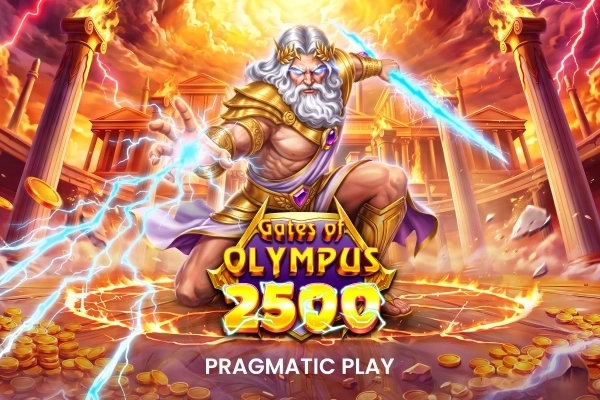
Gates of Olympus 2500 is a distinct Pragmatic Play release with Zeus, a six by five symbol board and a choice made by a feature wheel before free spins. Its most useful identifying detail is that feature structure. Someone familiar with the original Gates of Olympus will recognise the visual language and pays anywhere approach, but should still check which mode has been awarded. Two similar looking free spin screens can apply different collection rules. The full game title and mode label therefore matter more than assuming every Zeus game follows the original feature.
The number in the title refers to this edition and its published multiplier ceiling. It does not promise that a player receives that multiplier, and it is not an amount of rupees. This page separates the normal spin process, multiplier arithmetic and four free spin modes so that each screen can be read on its own terms. The examples use invented credit amounts to explain calculations. They are neither recorded results nor forecasts. Before a live round, use the information panel of the loaded title to confirm the rules and the exact configuration supplied by the host.
Paying counts on the six by five board
Normal symbol wins use matching symbols anywhere on the board. The published description places the paying count bands from eight through twelve or more matching symbols. A person does not need to trace a fixed payline or connect neighbouring gems. Count one symbol type across the full board and then read its value in the relevant band. The thirty visible positions are the space in which the count is evaluated; they are not thirty individual payments. Different symbol types can have different values even when the same number appears.
Imagine nine identical gems scattered among the six columns. Their separated positions do not prevent a qualifying pays anywhere result. Seven matching gems, even arranged in an attractive diagonal, remain below the ordinary starting threshold. The useful comparison is the count against the paytable, rather than whether the arrangement looks symmetrical. Special multiplier and scatter symbols have separate jobs. Counting every bright icon as one interchangeable symbol would mix ordinary payments, feature entry and multiplier collection into a rule the game does not use. Read those categories separately before trying to reconstruct a complicated board.
Tumbles resolve the same initial stake
A qualifying result produces a tumble: paying symbols disappear and new symbols occupy the spaces. Another qualifying result can extend the same spin. That creates multiple visible boards from one initial paid action. It is useful to think of the process as a sequence with a single starting stake, rather than a succession of new bets every time symbols fall. The sequence total develops as the boards resolve. A final celebration presents the completed calculation, while earlier smaller figures may have represented intermediate awards within it.
For example, suppose a sequence contains assumed base awards of one, three and two credits. The unmultiplied total is six. Counting the one, then the running four, then the running six as independent payments would incorrectly produce eleven. Choose either incremental amounts or the final accumulated total when checking a replay. This record keeping principle also helps when a phone animation briefly alternates between a board win and a feature total. More tumbles can provide more events to follow, but the number of animation stages alone does not establish the value of the spin.
Adding multipliers on a winning sequence
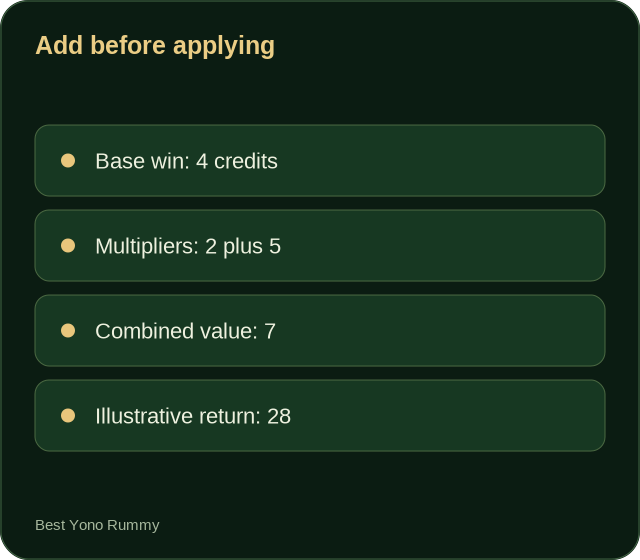
The published game allows multiplier symbols up to two thousand five hundred times. When several relevant multiplier values appear in the same spin, they are added before the resulting multiplier applies to the win total. Addition is therefore the first arithmetic operation to identify. This differs from multiplying every displayed multiplier by every other one. The distinction becomes substantial even with modest illustrative figures, and it is easy to lose in a dramatic animation. Read the symbols, the combined multiplier display and the final award as successive stages of one calculation.
Assume an eligible sequence total of four credits and multiplier values of two and five. Adding the multiplier values gives seven, producing twenty eight credits when applied to the four credit total. Multiplying two by five first would produce a different, incorrect example of forty. The example does not claim that those values occur together or that all visible symbols always qualify in every mode. It explains why the collection rule matters. A large multiplier number is a scale factor for an eligible payment, rather than an independent deposit into the account wallet.
Triggering and extending free spins
Four or more scatters award fifteen free spins under the published description. During the feature, three or more scatters award five additional spins. These two thresholds operate at different stages, so record whether the board belongs to normal play or an active feature before interpreting it. Three scatters during a feature can therefore have a function that three scatters in normal play do not share. The remaining spin counter should show the extension, while the running win and multiplier displays continue to describe their own separate quantities.
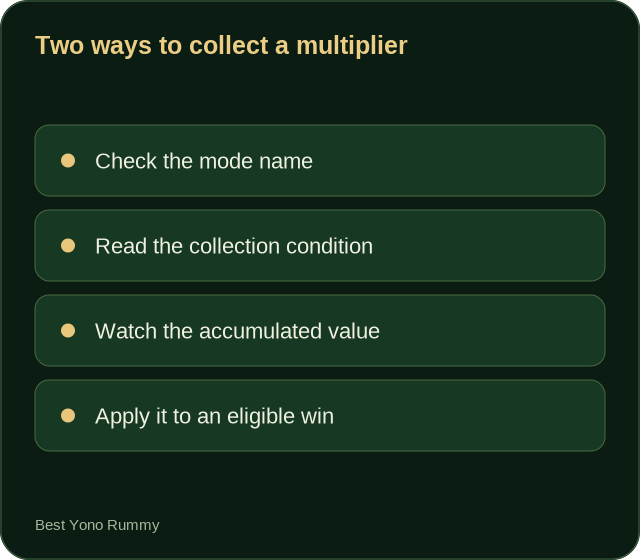
Before the free spins start, a wheel selects one of four feature modes. That selection is an outcome of the game's process, rather than a request to choose whichever mode produced the largest result in a video. The starting screen should name the mode so that its collection behaviour can be followed from the first spin. If a feature is recorded for later checking, include this opening screen. A clip beginning halfway through can omit the one detail needed to explain why multipliers are being collected in a particular way.
Feature one collects on winning spins
In the first published feature mode, multiplier symbols landing on a winning spin are added to the accumulating multiplier total. The qualification of the spin therefore matters before the accumulation can be interpreted. A multiplier icon on its own is not enough information to reconstruct the running total. Look for the relationship between the winning outcome and the collection animation. This creates a useful distinction between a multiplier that is visible in the current board and one that has actually entered the persistent feature state.
Imagine an illustrative feature total multiplier of twelve. A qualifying winning spin adds a three times symbol, taking that total to fifteen before the relevant award is resolved under the game's rules. A later board containing a multiplier but no qualifying collection should not simply be added on paper because the icon was visible. The example's purpose is to show the importance of the mode condition. It is not a complete simulation of every screen state. When the award sequence becomes busy, the game's labelled accumulated display is a better reference than remembering the largest icon from a single frame.
Feature two collects a wider set of multipliers
The second feature mode adds all landing multipliers to its running total, with the accumulated value applied to subsequent wins. This is the defining contrast with the first mode. A multiplier can contribute to the feature state even when its landing spin is not itself a winning one. The later award is still dependent on a qualifying win. An accumulating value is a resource used in the calculation, rather than proof of a payment that has already been made. The distinction explains why a feature counter can rise without a simultaneous change in the wallet.
For an assumed example, a running total of ten gains a five times value on a nonpaying feature spin. The resulting fifteen can matter to a subsequent eligible award. If that later unmultiplied award is two credits, applying fifteen gives thirty credits. The nonpaying spin did not itself become a thirty credit win; it changed the state used by the later calculation. Keeping these events separate makes a feature replay much easier to follow. It also shows why copying the collection method of feature one into feature two can produce a mistaken reconstruction.
The two Super Free Spins variants
The other two modes are Super Free Spins versions of those feature approaches. Their published minimum multiplier value is ten times. The important word is minimum: it describes the lower end of relevant multiplier values within those modes, not a guarantee that every spin pays ten times the stake. A spin must still satisfy the applicable payment and collection rules. The Super label should therefore be read as a modification of the feature structure, rather than a separate promise about the final result or an assurance that a feature will recover earlier stakes.
An illustrative comparison helps isolate the change. If an eligible award were one credit, a collected ten times value would affect it differently from a two times value. That tells us about the calculation after the symbol and payment have qualified. It tells us nothing about how often either event occurs. A sound product comparison lists the mode conditions and the changed minimum without claiming an advantage from a few screenshots. For the same reason, a large Super result in a recording cannot establish the expected result of an ordinary feature or another person's later session.
Checking the stake and keeping editions separate
Before launching, confirm the exact title, stake unit and mode information in the loaded game. A credit amount is not automatically a rupee amount, and a larger stake can make the same bet multiple look much larger in cash. If twenty paid spins cost three credits each, the cost is sixty. A completed return of forty five leaves a net loss of fifteen credits, regardless of how impressive one tumble looked. Total returns minus total stakes remains the useful session calculation. Free spin awards are included in returns, rather than deducted from the recorded cost of earlier paid spins.
In a catalogue, keep this edition separate from the original Gates of Olympus and any other numbered release. The four mode wheel belongs to Gates of Olympus 2500; it should not be copied into the description of every game showing Zeus. Account registration, deposit options, withdrawal rules and local eligibility belong to the host's current service information. They are not established by the supplier's game page. A precise product page can explain the board, additions, triggers and modes while leaving those distinct account facts to their proper source. That makes the next action clear without presenting unverified availability as a game mechanic.
Four labels worth keeping in a feature record
A useful record of this edition contains the full title, awarded feature mode, running multiplier and remaining spins. Each label answers a different question. The title identifies the release, the mode identifies the collection condition, the multiplier describes the current calculation state and the spin count describes rounds remaining. A cropped picture showing only Zeus and a large number cannot establish all four. When comparing outcomes, preserve the feature opening message and final summary as well as any interesting intermediate board.
This approach also separates two common meanings of bonus. A free spin mode inside Gates of Olympus 2500 is part of the game's rules. A welcome promotion attached to a host account is a separate commercial offer with its own eligibility and conditions. The presence of one does not establish the other. Keeping those labels distinct makes the product page easier to use and prevents a mode wheel from being mistaken for an account promotion.
Questions about Gates of Olympus 2500
Are the multiplier symbols multiplied together?
The published description adds relevant multiplier values within the spin before applying the combined multiplier to the eligible win. Adding two and five produces seven; it does not produce the product ten.
What separates the first two free spin modes?
The first mode collects multipliers landing on winning spins. The second collects all landing multipliers and applies the accumulated total to subsequent wins. The awarded mode label determines which condition to follow.
Do Super Free Spins pay on every round?
The Super modes publish a minimum multiplier value of ten times. That describes the multiplier range in those modes; a round still needs to satisfy the applicable payment rules to produce a return.
Source notes
Listing reference: game artwork and catalogue.