Sweet Bonanza
Pragmatic Play

From candy-filled reels to mythological worlds, explore the studio behind Sweet Bonanza, Gates of Olympus and Big Bass Bonanza.
Explore the studio’s titles in this directory.
Pragmatic Play
Pragmatic Play
Pragmatic Play
Pragmatic Play
Pragmatic Play
Try a different name, or clear the filters to explore the whole collection.
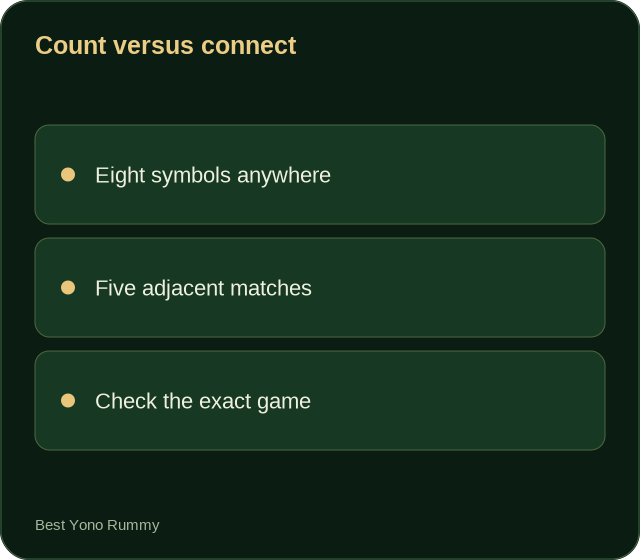
The Pragmatic Play collection contains Sweet Bonanza, Sugar Rush 1000, Gates of Olympus, Gates of Olympus 2500 and Big Bass Bonanza. The first two use confectionery imagery, the two Olympus entries feature Zeus, and Big Bass Bonanza uses a fishing theme. The useful comparison is how each title evaluates symbols. Sweet Bonanza counts matching symbols anywhere, Sugar Rush 1000 asks for adjacency, and Big Bass Bonanza gives its fisherman wild a collection role in the bonus. A picture of a sweet or a fish tells only part of that story.
Pragmatic Play lists the individual games on its own site. Its original Big Bass Bonanza announcement also places that title in the Reel Kingdom offering. Keep that specific credit when describing the game's origin. A studio collection is a grouping of documented titles, not a claim that each listed app carries them. Choose the exact title first and then follow its own rules. This makes the difference between a shared studio, a shared theme and a shared mechanism visible from the start.
In the original Sweet Bonanza, the studio describes matching symbols counted anywhere on the tumbling reels. The threshold begins at eight matching symbols. The fruit or sweet need not form one connected island merely because a different candy-themed game uses clusters. When looking at an example, identify a single symbol type and count only instances of that type. Mixing grapes and other fruit together because their colours look similar would change the calculation without any support in the rules.
Imagine eight identical symbols distributed across four separated parts of an illustrative screen. The count is still eight despite the gaps. Now consider a connected group of seven of the same symbol. Its compact shape may look stronger to a viewer, but the example still has seven rather than eight. This simple contrast explains the word anywhere without needing to assign a prize or invent a configuration. The title has its own symbol values and feature conditions; the paper count demonstrates only the spatial rule.
Pragmatic Play describes Sugar Rush 1000 as using a seven-by-seven grid. Five or more adjacent matching symbols can form a winning cluster. A connection between the pieces is therefore part of the rule. A screen can hold many matching items spread too far apart to make the required group. That is a substantial difference from the anywhere count in Sweet Bonanza, even though both games use sweets, vivid colours and symbols that disappear during a tumble.
Draw five identical marks in one continuous horizontal row on squared paper, then draw the same five in isolated corners and spaces on another grid. The total number of marks is unchanged. The first arrangement has an obvious connected group; the second does not. If checking an irregular cluster in a real game, use the game's specified adjacency rules rather than assuming that a diagonal corner contact always counts. It is easier to count a shape once you know exactly which neighbouring positions may join it.
The studio explains that a winning symbol's position is marked and a later win on the same spot can turn that position into a multiplier spot. This makes the board's history relevant. A new symbol may occupy a position that previously carried a completely different sweet. The important identity for this feature is the position on the grid, not a particular drawing of a jelly bear. Distinguish the underlying cell from the object occupying it at any one moment.
A paper model helps. Number the rows and columns and mark one cell, perhaps row three, column four. Clear all the drawn sweets while keeping that cell label. Now put a different sweet at the same coordinates. The symbol has changed while the location has not. Watching a clip in this way makes it easier to see why a highlighted square remains relevant after a tumble. A cropped clip beginning halfway through can show an existing multiplier without showing when the square first acquired its mark.
The original Gates of Olympus also uses matching symbols counted across the reels. Its distinctive identification clues include Zeus, its mythological setting and multiplier symbols. Pragmatic Play describes an accumulated multiplier in the free-spins feature when a multiplier appears on a qualifying winning spin. Several numbers can therefore be visible at once: individual multiplier values, the running feature value and a result for the current spin. Read the label next to each number before attempting to explain a clip.
Suppose an illustrative feature panel starts with a running factor of three and shows a newly added factor of two under a rule that adds them. The updated factor is five. That arithmetic is separate from the value of the underlying winning combination. A screenshot showing only the large five cannot tell you the underlying number of credits or the earlier factor. Identifying those roles helps explain a particular feature without treating every appearance of Zeus or every multiplier in another Olympus edition as equivalent.
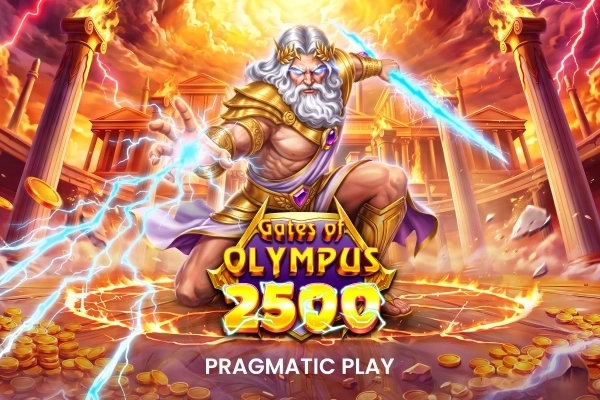
Gates of Olympus 2500 is its own named release, not an alternative spelling of Gates of Olympus. Pragmatic Play describes a six-by-five grid and several free-spins modes for the 2500 edition. It also describes a wheel before the feature that determines which type of free spins is activated. A comparison that quotes a feature rule should therefore identify the edition and mode. Original artwork of Zeus on both pages is weaker evidence than the title and feature language on the studio's record.
The number 2500 belongs to the game's name and to its marketing of a possible multiplier. It is not the result of an ordinary spin seen in a screenshot. If a friend remembers an Olympus session with a wheel, the 2500 edition becomes a sensible candidate, but the complete title remains the strongest starting evidence. A screenshot from a different Olympus release may also share visual elements. Record which mode the rules describe before borrowing an explanation about accumulating multipliers from one edition for another.
Big Bass Bonanza provides a visual and mechanical contrast. Its fishing theme places money symbols and a fisherman wild at the centre of its bonus description. Pragmatic Play explains that the wild collects the visible money symbols in the feature. A value displayed on a fish and the act of collecting it are separate events. Compare a screen that shows a fish value with a screen that shows the relevant collector. The first alone does not establish that the collection event has occurred.
The original publisher announcement identifies the Reel Kingdom connection, which is useful when comparing the title with a similarly named fishing release. Several later games use Big Bass in their names. A new setting, added number or additional word can identify a separate title with different rules. If the only clue is a fisherman, keep the family as a possible match and look for the exact wording on the title screen. A series name can narrow a search without identifying a particular feature table.
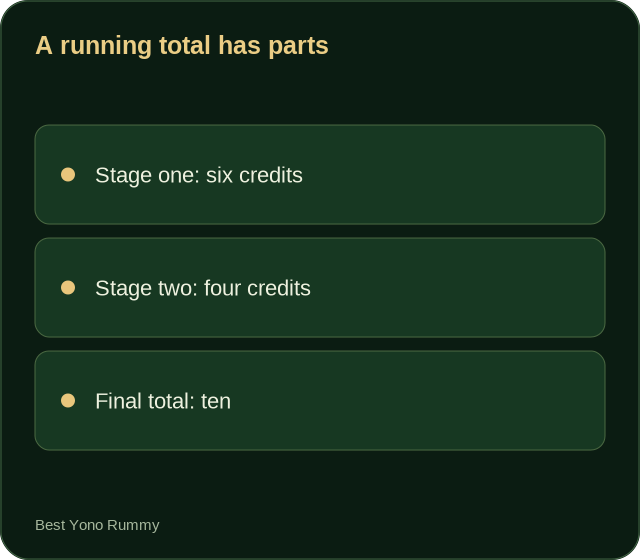
A tumble can remove qualifying symbols, fill the empty spaces and lead to another evaluation within the same spin. The animation may display results after each stage and another total at the end. In a teaching example, suppose the first stage is labelled six credits and the second four, followed by a final total of ten. The complete result in that example is ten, not twenty. Counting the final total in addition to the two constituent stages double-counts the same information.
Compare that example with a multiplier event. An initial value of six multiplied by four produces twenty-four; it does not produce ten. Both illustrations use the numbers six and four, yet the labels define different operations. An accurate account of a game clip should identify whether a number is a stage result, a factor, a counter of remaining spins or the final total. If the clip cuts off the caption, leave the operation unresolved instead of inferring it from the size or colour of the number.
When comparing two studio game pages, look first for the question the rules answer. Do matching symbols need to touch? Does the affected object follow a symbol or stay with a grid position? Does a collector have to appear in the same feature state as the displayed value? Those questions produce meaningful differences among the five entries even without discussing a maximum return, personal odds or a particular operator. Each is grounded in a visible action that can be checked against the title's own explanation.
The exact version and mode matter for technical numbers. Different configurations can have different disclosures, and a rounded figure copied into a directory may hide its context. If you are identifying a particular operator version, record the title, version or help identifier where available and the stated mode on the screen. This studio page provides the publisher references and the conceptual differences. It does not establish what a separate app, lobby or installation offer currently makes available to a particular reader in India.
For Sweet Bonanza, keep the complete unsuffixed title and a note about matching symbols anywhere. For Sugar Rush 1000, keep the suffix and a note about clusters on the seven-by-seven grid. For the original Gates of Olympus, keep the title and the relevant feature state. For Gates of Olympus 2500, add the edition number and the mode selected for the free spins being discussed. For Big Bass Bonanza, keep the original title, the publisher record and the Reel Kingdom credit.
A reader returning later can then start from a verified difference instead of scrolling through several similar thumbnails. If all they remember is a candy theme, the first question is whether the symbols needed to form a connected group. If all they remember is Zeus, the edition and feature mode become the next details to recover. If they remember fish with values, check whether the clip showed collection by a wild. That is enough structure to turn a vague visual memory into a useful game-specific question.
Consider one image showing separated matching fruit and a second showing a marked square beneath a sweet. The first suggests an anywhere-pay explanation, while the second points towards a grid position carrying its own history. Neither clue replaces the game title. Ask for the neighbouring title screen or the studio's game record before stating a definitive match. This exercise is useful precisely because several games share themes and animations. A single visual clue narrows the search; a title and a rule together settle considerably more.
For a final cross-check, cover the imagery and read only the two written rule summaries. A reader should still be able to distinguish a connected group on a fixed grid from a threshold of scattered matching fruit. If the written description says only that symbols disappear, it is missing the condition that determines which symbols disappear in the first place.
The original Sweet Bonanza counts matching symbols anywhere. Sugar Rush 1000 evaluates clusters of at least five adjacent matches, and particular grid positions can acquire multipliers after repeated wins.
They are separately named releases. The 2500 edition has its own studio page and free-spins modes; identify the edition before applying a multiplier explanation to a particular clip.
Pragmatic Play includes Big Bass Bonanza in its catalogue and identifies the original release as part of its Reel Kingdom offering. Preserving both credits makes the attribution more precise.