The original Gates of Olympus
Gates of Olympus is the Pragmatic Play slot featuring Zeus above a six column, five row board. Its defining combination is a pays anywhere system, repeated tumbles and multiplier symbols. These three elements should be read in order. Matching symbols establish a payment, the tumble can replace them with fresh symbols, and a qualifying multiplier changes the value of the resulting win. The large character and coloured gems make the game immediately recognisable, but they do not turn it into a conventional slot with a small set of fixed line shapes to trace across the screen.
This page covers the original Gates of Olympus. Gates of Olympus 1000 and Gates of Olympus 2500 are separate titles, with their own feature details and limits. The number added to a title is an edition identifier, not a setting that can simply be switched on in the original. Check the complete name in the loading screen, particularly when the catalogue uses similar portraits of Zeus for several releases. Reading the right rules matters more than recognising the character. A comparison should use each edition's own information panel rather than combining the most attractive features of the entire series.
Matching symbols anywhere on the board
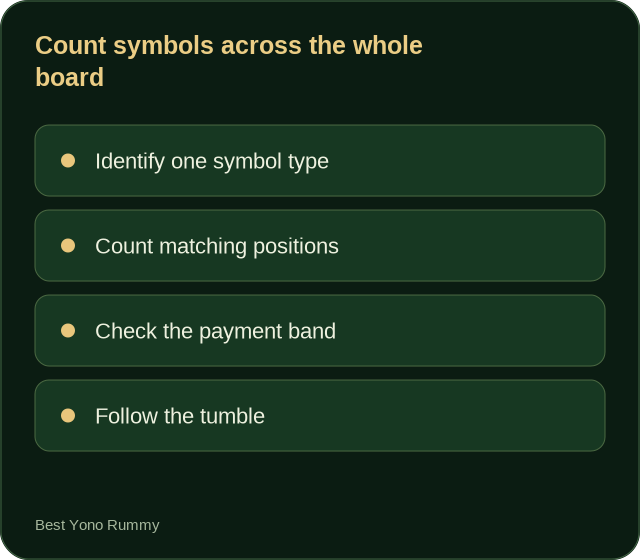
The original game's normal symbol wins require at least eight matching symbols anywhere on its thirty positions. Their location does not have to form a straight line or an adjacent cluster. That is why a qualifying group can look scattered across the board. Count the matching symbol type, then consult its payment band, instead of drawing a route between the symbols. Different symbols have different values, and a larger count can move a win into another band. The live paytable is the place to check the precise amount for the loaded game and stake.
For example, imagine eight identical low value gems spread across four columns. The absence of an unbroken horizontal row does not disqualify them under a pays anywhere rule. Conversely, five attractive matching symbols in a tidy line are still below the normal eight symbol threshold. This contrast is useful for someone moving from a five line gem game into Gates. Visual order and payment qualification are separate questions. A screen can look organised without paying, while a scattered arrangement can qualify. Special symbols have their own rules, so the eight symbol test should not be applied automatically to scatters or multiplier icons.
What a tumble adds to one paid spin
A tumble removes symbols involved in a winning result and replaces them, allowing the same paid spin to continue. The stake has already been placed for that spin; the next tumble is part of its resolution. As long as the sequence produces the required winning results, the board can keep changing. When it stops qualifying, the spin's sequence ends. This gives the game a chain of visible stages even though the player started with one spin action. Counting each falling board as a separate paid bet would overstate the cost and misunderstand the round history.
Suppose a hypothetical sequence produces base awards of two, one and four credits across three paying stages. The unmultiplied sequence total is seven credits. A later display of seven is the sum of those stages, not an additional seven to be added to the same calculation. When examining a replay, write down only the incremental amounts or use the final total, rather than mixing the two methods. A long tumble chain is visually busy, but length by itself does not establish a large result: several small awards can still produce a modest total. The actual values and multiplier application decide the payment.
Reading the multiplier symbols
The original Gates of Olympus publishes multiplier symbols ranging from two times to five hundred times. These are feature values within a particular outcome, rather than a prediction about the next spin. A multiplier should be read together with the winning sequence to which it applies. A large icon appearing on a board is therefore not a separate cash amount. The animation highlights the number because it can change an eligible award; it does not mean that the displayed number is paid simply for being visible. Follow the win total through the sequence to see the effect.
Take an illustrative seven credit eligible win and a ten times multiplier. Applying that multiplier produces seventy credits, not seventy additional credits on top of another seventy. If an interface displays the base total first and the multiplied total afterwards, it is showing a calculation in two stages. The same arithmetic works with fractions: a half credit award multiplied by ten becomes five credits. Multipliers can make small underlying awards matter, but they do not create a guaranteed payment from an outcome that does not qualify. The precise treatment of several symbols is stated in the loaded rules and should be read there before interpreting a complex replay.
Entering and following free spins
Four scatters trigger fifteen free spins in the original published game. The scatter route is separate from the normal eight matching symbol rule, so scatter qualification should be counted using the feature condition. Once free spins begin, the accumulating multiplier behaviour becomes central. The multiplier total can develop through the feature, making the state of an earlier free spin relevant to the calculation of a later one. Watch the running feature multiplier alongside the remaining spin count. They describe different things, and a larger multiplier total does not say how many rounds are left.
An illustrative feature can make this distinction clear without predicting an outcome. Assume a particular eligible award is three credits and its applicable multiplier total is twelve. That award becomes thirty six credits. If the next round has no qualifying award, the mere existence of the multiplier total does not require a payment on that round. Likewise, adding free spins and adding multiplier value are different events. The feature summary reports the completed result, while the on screen counters describe its state while it is running. Reading each counter by its label avoids treating every increasing number as money already received.
Stakes, credits and the net session result
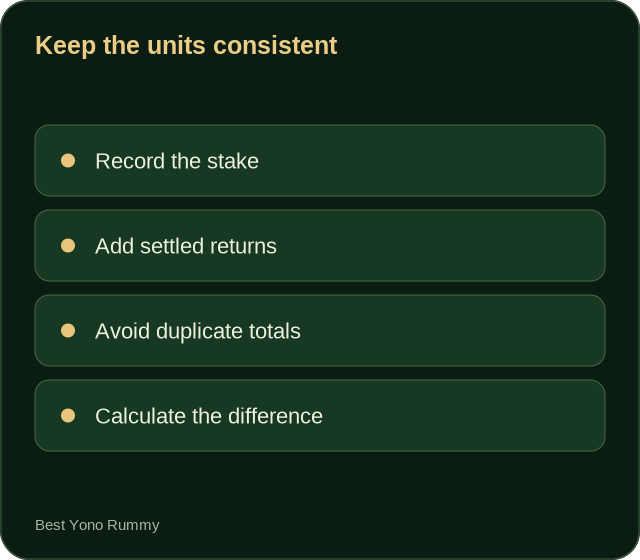
The most useful numerical comparison starts with the total stake per paid spin. A setting shown as credits should remain in credits until the actual conversion is known. If a hypothetical configuration charges two credits per spin, twenty spins cost forty credits before returns. A final collection of thirty credits leaves the session ten credits down even if its largest single win looked impressive. The calculation is total returns minus total stakes, using the same unit throughout. It does not depend on the colour of a celebration or the length of the tumble animation.
This distinction is especially relevant when comparing videos with a personal game screen. A recording at a larger stake can show a higher cash amount while representing a smaller bet multiple. An eighty credit return at a four credit stake is twenty times that stake; a thirty credit return at a one credit stake is thirty times. Neither example predicts future performance, and neither establishes that one stake level has an advantage. Multipliers describe how an award scales within the rules. The bet control describes the exposure the player selects before the round. They should never be treated as the same setting.
Gates of Olympus versus cluster and line games
Gates of Olympus differs from Sugar Rush 1000 even though both use colourful symbols and tumbling results. Sugar Rush uses adjacent clusters and tracks multiplier development on board positions. Gates uses matching symbol counts across the board and its own multiplier symbols. A gap between two matching gems can matter in a cluster game but need not break a pays anywhere count. That single distinction explains many apparent disagreements when someone tries to use the rules of one title to read a screenshot of the other. A catalogue should make the payout structure easy to identify.
A five line game such as a Fortune Gems edition asks a different question again: which of its specified line patterns qualifies? There, a group of matching symbols scattered across the screen may fail to form the required line. These comparisons are about readability and personal preference, rather than a claim that more positions or more visible ways automatically improve the chance of a profitable session. Thirty positions do not supply thirty independent guaranteed payments. Each title defines how its positions interact. Choosing a game by that interaction is more informative than sorting only by bright covers, large numbers or the word bonus.
Controls and a readable mobile screen
Before the first spin on a phone, locate the information button, stake selector, current balance and spin button. The entire six by five board should remain visible without obscuring those controls. If browser bars cover the lower interface, adjust the viewing mode before placing a stake. Speed and animation options can change how quickly results are presented, but they should not be confused with changing the mathematical rules. A faster sequence also gives less time to follow the individual tumble amounts, so ordinary speed can be more useful when learning to read the game.
The account wallet, game round and host's support system remain separate parts of the experience. When a connection interrupts a feature, the useful information is the exact title, time, stake and any available round reference. An image of Zeus does not identify which edition was running, so include the full title in a support request. Avoid repeatedly submitting another spin while the previous result is unclear. If a pending round resumes after reload, follow its settled history rather than adding the same displayed award again. This is a practical record keeping approach, not a claim about the recovery procedure of every operator.
Selecting the right Olympus edition
Choose the original Gates of Olympus for its specific pays anywhere and accumulating feature design, then use separate catalogue pages to compare the numbered editions. The original should not inherit the four feature modes advertised for Gates of Olympus 2500. Similarly, the largest multiplier printed on another edition's page does not update the original game's rules. Accurate title matching is particularly useful in search results, where a short query may show several games from the same family. The full studio attribution and exact edition name should remain visible on the product tile and destination page.
Before using a live launch route, confirm the actual game title, selected stake and loaded information screen. The product description does not verify a host's account terms, payment methods, promotional conditions or availability to a particular person in India. Those details require the host's own current information. The numerical examples here demonstrate counting and multiplication with assumed figures; they are not test results or a strategy for obtaining a favourable sequence. The central task is to read a completed round accurately: qualify the matching symbols, follow the tumbles and then apply the multiplier rule stated for that exact game.
The difference between a count and a pattern
When explaining a round to another person, mark all matching regular symbols first and then state their total count. This produces a useful record without inventing a line between them. Mark scatters separately because they answer a different question about feature entry. Finally record any applicable multiplier. Keeping these three categories apart makes an annotated screenshot understandable even after the animation has finished. It also makes clear why a tidy row below the required matching count does not qualify as an ordinary pays anywhere win.
Questions about Gates of Olympus
Do matching Gates of Olympus symbols need to touch?
Normal symbol wins in the original game use a pays anywhere count, beginning with eight matching symbols. The symbols need not form a line or an adjacent cluster across the six by five board.
How does the original game enter free spins?
Four scatters trigger fifteen free spins in the original published game. Scatter qualification follows its own rule, so the normal eight matching symbol threshold should not be applied to the feature trigger.
Is Gates of Olympus 2500 the same game?
It is a separate Pragmatic Play title with its own multiplier range and feature structure. Check the full edition name before using a rules description or comparing a recorded outcome.
Source notes
Listing reference: game artwork and catalogue.