Which listing carries the name Goa Spin?
Goa Spin is the two-word app name filed under Spin apps in this catalogue. The leading word makes it easy to recognise among Spin Gold, Spin Crush and Spin 777. Keep the last word when comparing it with a result labelled Goa Slots. Those two strings answer different searches. A picture of a beach or a casino floor could illustrate either result; the written label is a much better starting point.
Consider two messages someone might send. “Where is Goa Spin in the list?” can be answered by opening All apps, entering the two words and reading the profile. “Where can I play the shell game I saw in Goa?” contains no confirmed app name. A useful reply asks whether the sender remembers the game title, the studio mark or a distinctive word on the help screen. Assuming both questions point to the same product discards the most useful clue in the second message.
A place in a name
Goa is part of the title on the Goa Spin card. It supplies no street address, licence or geographic boundary for an app service. A map pin belongs to a physical venue; a publisher field belongs to a software listing. Someone who wants opening hours for a particular building needs the first kind of result. Someone returning to a mobile game needs the second. Deciding which question you have saves a surprising amount of tapping on a small screen.
Suppose an old screenshot has a navigation pin in its top corner, a gold reel in the middle and Goa across the bottom. Any one of those details might belong to an advertisement outside the product itself. A second frame showing the opened page heading can be more revealing than a sharper version of the same cropped artwork. On a mobile browser, compare the heading and the address bar in the same view. On a catalogue page, the source link identifies the page used to record the name.
Read the symbols in a reel window
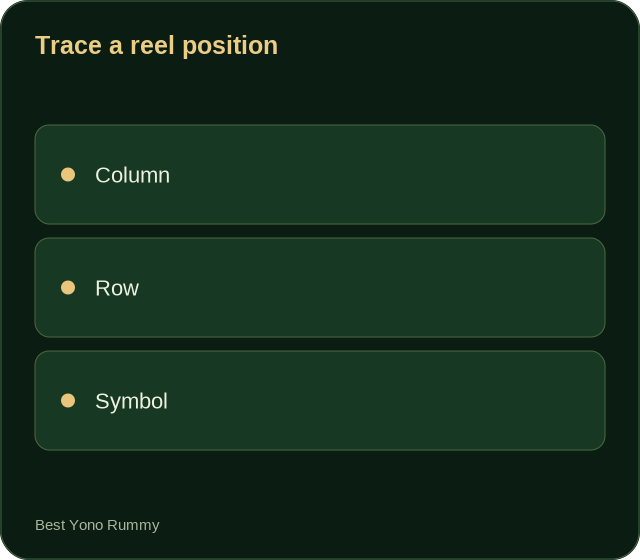
A reel window shows a slice of each reel. Imagine three windows showing a shell, a leaf and a star from top to bottom. Number the columns from left to right and the rows from top to bottom. The shell in column one, row one has an address even if identical shells appear elsewhere. This is a useful way to describe a spin to another person without drawing the whole display. The example uses paper symbols of our own.
Make a complete board by writing columns vertically. Column one reads star, shell, leaf. Column two reads leaf, shell, compass. Column three reads compass, shell, star. Now ask where a leaf appears. Column one has a leaf at the bottom while column two has a leaf at the top. Neither answer uses the word middle, so they can be checked independently. The middle position of every column happens to contain a shell. That observation describes a pattern before we have said whether any rule counts it.
Turn the same paper sideways without rotating your labels. The middle row remains the middle row because the addresses were attached to the board. An observer who reads the symbols as a string from top left down the first column would get another sequence altogether. State whether your list is ordered across rows or down columns when sharing a transcription. This tiny convention prevents most disputes about whether the second shape was a shell or a leaf.
Follow one highlighted line
A highlighted line is a route through the window. Draw the middle row across three columns, then draw a shallow V on another sheet. An arrangement can complete one shape without completing the other. Counting every matching picture across the screen loses that distinction. First look for the line shape in the legend. Then trace exactly one position in each column in the stated reading direction. Only then compare the selected symbols with the corresponding paytable entry.
Try two routes on the board. The first selects row two in every column. Its symbols are shell, shell, shell. The second selects rows one, two and one. It reads star, shell, compass. Under a simple rule awarding one paper point for three shells on a marked route, only the first earns a point. Moving a pen to the nearby shell in the final column would complete a set of three, but the pen would have left the second route. The rule concerns the marked positions, not the nearest attractive combination.
Now change column two's middle shell into a leaf and leave the first route selected. The player sees two matching shells, one at either end. A rule asking for three consecutive shells does not permit the leaf to vanish just because the endpoints match. If a real game allows some symbol to substitute, the legend must identify which symbol that is. Restoring the original shell is a different test from granting the leaf a new power.
For a quick self-test, keep the board from the first example and invent a route that selects no shells. Start at the star in column one, choose the leaf at the top of column two and finish at the star at the bottom of column three. The selected triple now reads star, leaf, star. There are still three shells elsewhere on the board. This makes a neat demonstration of the difference between the contents of the whole picture and the contents of a specified route.
Where a scatter changes the question
A scatter rule can count appearances anywhere in the window. In an imaginary rule book a shell might need three matching positions along a line while a compass needs three appearances anywhere. Two compasses on one row and one in a corner could satisfy the second condition. Calling both combinations a line would make a perfectly ordinary result seem inconsistent. Use whatever the actual game's help calls its symbol; appearance alone cannot supply a rule.
For a second paper board start with a compass at top left, bottom centre and top right. A rule reading “three compasses anywhere” is met at all three addresses even though the middle row does not contain one. Replace the final compass with a leaf and the count falls to two. A halfway example like this is useful when teaching the difference: one change affects the scatter total while leaving the middle horizontal route exactly as it was.
If the legend says “one qualifying symbol on each of three separate reels”, then two compasses in the same column have a different significance. Draw an extra compass above one already present. The board now has more compass pictures but the number of columns containing at least one may stay the same. Count the items the rule names. A total of symbols, a total of occupied columns and a total of completed lines can all be correct answers to their respective questions.
Read an app directory figure in its original units
A figure with a rupee sign refers to an amount in Indian currency. It should remain separate from the point value beside a reel pattern. The third-party source used for this listing records a signup amount and a minimum withdrawal figure with a date. Those entries describe what that source displayed. They tell us nothing about the coordinates of a reel symbol or the number of points in a demonstration. A comparison is useful only while its column labels travel with the figures.
For this historical profile the cited source showed ₹211 under signup bonus and ₹100 under minimum withdrawal. Transcribe the labels next to the values. Taking the difference, ₹111, would produce a number with no useful product meaning because the source never says the first amount is cash eligible for the second condition. The date of a listing also supplies a reason why another reader might see another figure. Our shell exercise has no signup, no deposit, no withdrawal and no conversion of points.
Keep the game title with the result
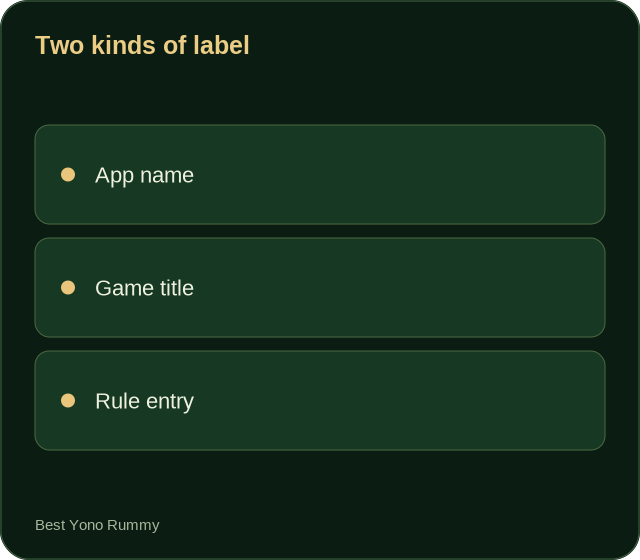
If a lobby contains several games, the app title identifies the surrounding software. The title printed above a particular spinning board identifies the game whose rules you need. Preserve both names on a note. Add the exact symbol in question and whether the help page describes a line or a scatter. A second game in the same app can assign a completely different function to the same drawing of a shell.
Imagine that one title in a catalogue uses the shell as an ordinary symbol while another uses it to open an extra screen. A message saying “the shell does nothing” cannot be resolved until the title and the situation are known. A clearer message would say that three shells appeared across the centre in the worked example and ask whether the middle line was active. That question can be answered directly from the small drawing without asking for a person's account or transaction history.
Find the same entry on a small screen
Start in All apps and type the shorter, distinctive word Goa. Read the complete result before selecting it. A narrow tile may truncate its subtitle even while the full name appears on the detail page. Saving the detail in this directory preserves a useful way back on the same browser. The Install app control, when active, opens a separately configured offer; read the product name at its destination before treating the two as a match.
There is a useful distinction between clearing a search and removing a saved item. Clearing the Goa search should show a wider set of catalogue cards again. It does not tell you that a saved card has disappeared. Open the Saved collection itself to inspect its contents. If Goa Spin and Spin Gold are both present, the leading word distinguishes them immediately. On a screen reader or in plain text those two labels are often clearer than colour and cover art.
What to keep from a session
A useful note about an illustrated round can be brief: the exact game, window size, line selected and symbols on that route. To revisit an app listing later, the useful fields are different: full app name, source and date seen. Keeping those two notes apart gives a friend enough information to answer a practical question without guessing whether Goa Spin names a venue, a game within a lobby or the app card you meant to send.
To test your explanation, hand the board and the rule to another person but keep your answer hidden. Ask them to name the selected cells and only then count a match. If they reach a different answer, compare addresses before comparing interpretations. A disagreement at the first step belongs to the drawing. A disagreement after the same addresses were chosen belongs to the rules. That method works for the example even if neither person has ever opened the app, and leaves the actual game’s documented features to its own source.
There is one last piece worth recording when you send that exercise: whether the symbols are listed by columns or by rows. The grid in our example was originally built from columns, while the route was read across them. A reader can translate one presentation into the other, provided the directions are explicit. If the two readers agree on that convention, they can reconstruct the scene on an ordinary sheet of paper without sharing an app, a phone model or an account.
Questions about Goa Spin
Is Goa Spin the same entry as Goa Slots?
Goa Spin is the name of this profile. Keep the complete two-word title when comparing a Goa Slots result and check the source page for the product you meant.
What is the difference between a reel line and a scatter count?
A line selects specific positions across the board. A scatter example counts independently placed symbols under its own rule, which can give a different result on the same board.
Does the Goa Spin name identify a real-world venue?
The title identifies a catalogue entry. A physical venue would need an attributable address and venue name. A location word within an app title supplies neither detail.
Source notes
Listing reference: app-name directory.